


Come back to your senses. More often than never.
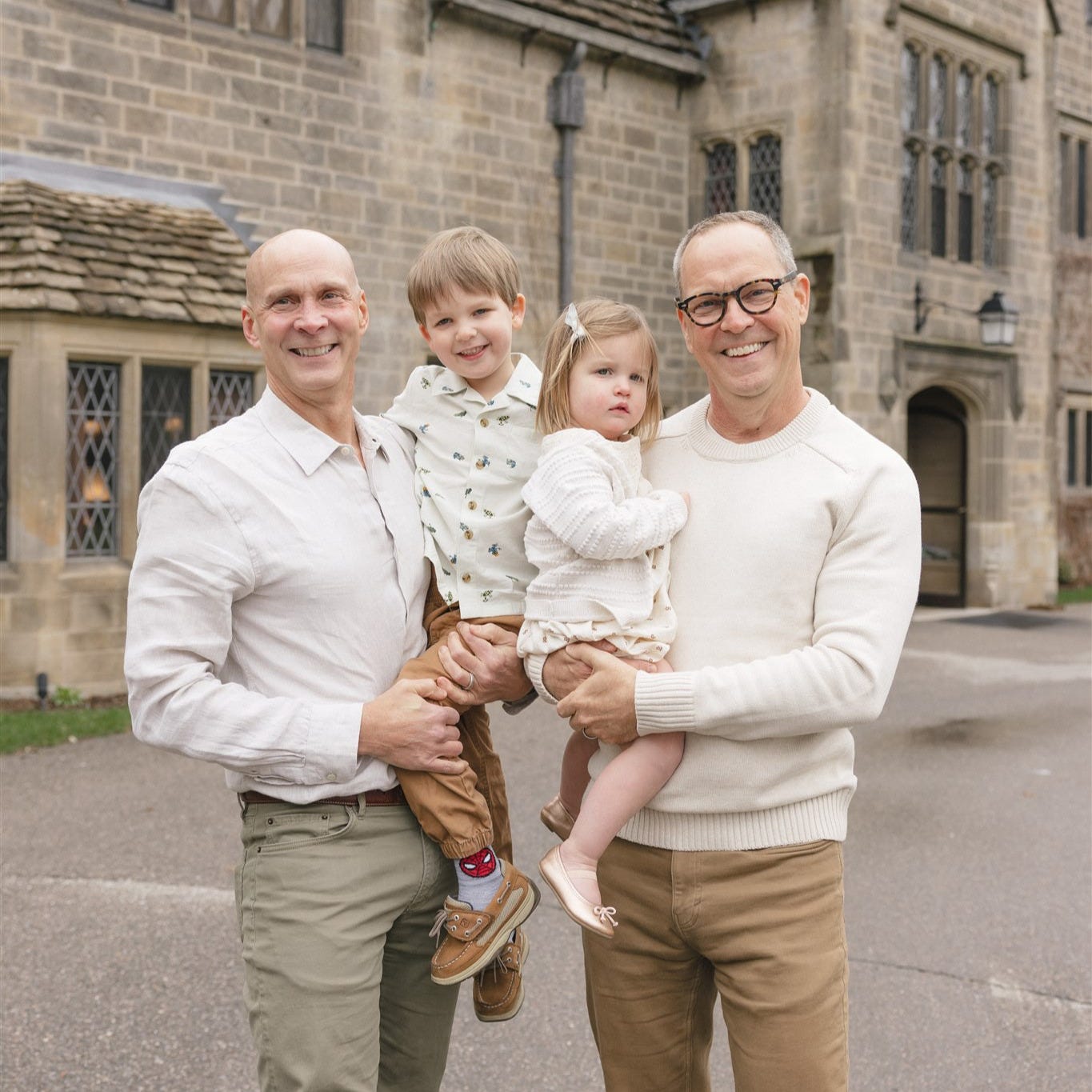
Hey! I’m Daron.
My grandkids call me Grampy. My daughter calls me Dad. I've been married since it became legal, but Matt and I have acted as if it were since 1995. He calls me Daron.
I’m a mindfulness coach
You can call me whatever you want, but I’m not a guru. I’ve never been a monk, Buddhist, or vegetarian, but I’ve practiced mindfulness daily for twenty-three years. I’ve attended dozens of silent meditation retreats since 2002, ranging from four days to three weeks, mostly a little over a week at a time.
Practicing mindfulness has changed my life, but I try not to make a big deal of it, and I’m not a fan of how mindfulness is usually marketed. It’s a skill, not a commodity.
I exercise habitually because it challenges my heart, lungs, and muscles, giving me more energy and vitality. I don’t stretch because I’m flexible. Stretching helps me recognize the limits and importance of being able to move freely. I don’t take the stairs because it’s easy. Taking the elevator is obviously easier, which is why I choose it over the stairs most of the time. I don’t lift weights because I hope to audition for superhero roles.
I don’t practice mindfulness every day to get better at sitting still in quiet rooms. I do it to inhabit my life more fully, to escalate its inevitable discomforts less, and to keep an appreciation of our shared humanity alive.
Exercise your attention with me
Exercising your attention helps you feel more alive and respond more effectively.
It’s easy to miss the experience of being alive. We often spend a lot of time thinking about the past and predicting the future. We unconsciously resist discomfort and choke the life out of pleasure.
Practicing mindfulness is a counterintuitive way to disrupt these tendencies and learn to savor pleasant moments more, wrestle with unpleasant ones less, and feel more alive. It’s so profoundly human that you don’t need anyone to teach you how to do it, but developing empowering attention skills on your own can be tricky. It helps to have someone convince you that such an odd-sounding pastime is worth exploring and that you’re not doing it wrong when you try.
Develop Phenomenal Awareness
Phenomenal Awareness is my non-dogmatic approach to mindfulness that emphasizes developing sensory awareness of ordinary phenomena rather than seeking on-demand calm or profound psychological epiphanies.
With consistent practice, multisensory attention exercises and habits help transform ordinary moments into phenomenal ones by equipping you to savor pleasant experiences more fully while reducing the impact of unpleasant ones.
Subscribers can read my field notes on sneaking mindful awareness exercises into real life. The commentary is always free. Upgrade to a paid subscription to access the guided attention exercises that put the theory into practice.
For $5/ month or $50/year, paid subscribers get weekly attention exercises to try.
Each one includes:
an audio recording from my Mindful Midday Pause archive
ordinary circumstances that are conducive to learning the exercise
personal examples of the challenges and benefits of exercising my attention
You can hear more about my approach to mindfulness here:
Never miss an update—every new post is sent directly to your email.
For a spam-free, ad-free reading experience, plus audio and community features, get the Substack app.
To learn more about the platform that powers this publication, visit Substack.com.
