



I’m glad I don’t have to track every sight, sound, and sensation to navigate the world, but paying closer attention to them can result in greater vitality overall.
According to Dr. Lisa Feldman Barrett, the brain’s primary function isn’t thinking or processing emotions, but managing the body’s complex metabolic needs.1 There is far too much raw data to process consciously. She says it would be completely overwhelming and metabolically inefficient for the brain to process every single sensation and perception. Instead, it relies on predictive models based on past experience to budget its energy resources more efficiently.
So if the brain can manage resources without us obsessing about the details, what’s the point of focusing on them through mindfulness practice?
Consider physical exercise. Modern life is much more sedentary than it was for our ancestors and even for our great-grandparents. In the absence of physical challenges, important bodily functions get weaker. We don’t have to lift heavy weights, take the stairs, or stretch every moment of every day, but if we invest a few minutes a day in challenging our bodies, they get healthier and stronger.
Modern life also impacts our attentional capacities. We whiz through pleasant moments without enjoying them and resist physical, emotional, and social discomfort without realizing it. Our attempts to avoid feeling anxious only make us feel even more anxious. We don’t need to get rid of our ability to function on autopilot, but we could benefit from disrupting it more often than never. We do this whenever we toggle our attention from trying to make sense of ourselves and the world to directly sensing the details.
Choosing what to focus on while allowing background stimuli to play out enhances flexible attention. By becoming more familiar with a broader range of perceptions, we can improve our perceptual clarity, which makes mundane observations feel more alive. Additionally, minimizing interference with the continuous flow of sensory details helps us feel more grounded and composed without needing circumstances to be ideal.
Checking your vital sensations
Vital signs are essential indicators of our physical health, and monitoring them is a fundamental aspect of medical care. By assessing these five easily measurable data points, healthcare professionals can quickly identify changes, detect underlying medical issues, and track a patient’s recovery. Vital signs provide a fast, objective way to spot early signs of potential medical concerns.
While it’s important to monitor our vital signs occasionally, sensations related to our basic bodily functions offer many chances for us to shift our focus from the content of our imagination to what is happening now.
Here are five ways to incorporate mindful body awareness into your daily routine by savoring our vital signs qualitatively rather than measuring them quantitatively.
Weight
Try to become aware of the substance of specific parts of your body.
Instead of thinking in quantitative terms — like trying to guess how many pounds or ounces they weigh — focus on feeling the impact of gravity and how your body occupies space.
Then, extend this awareness to different regions of your body and to your entire body.
Temperature
Take a moment to notice your overall body temperature. Is it consistent throughout your body, or does it vary from one area to another?
Which part of your body feels the coolest right now? Which part feels the warmest? Are there any areas where it’s hard to sense the temperature at all?
Briefly observing your body’s overall temperature or specific parts can be a helpful way to experience a mental reset. The more you practice, the more effective it will become.
Pulse
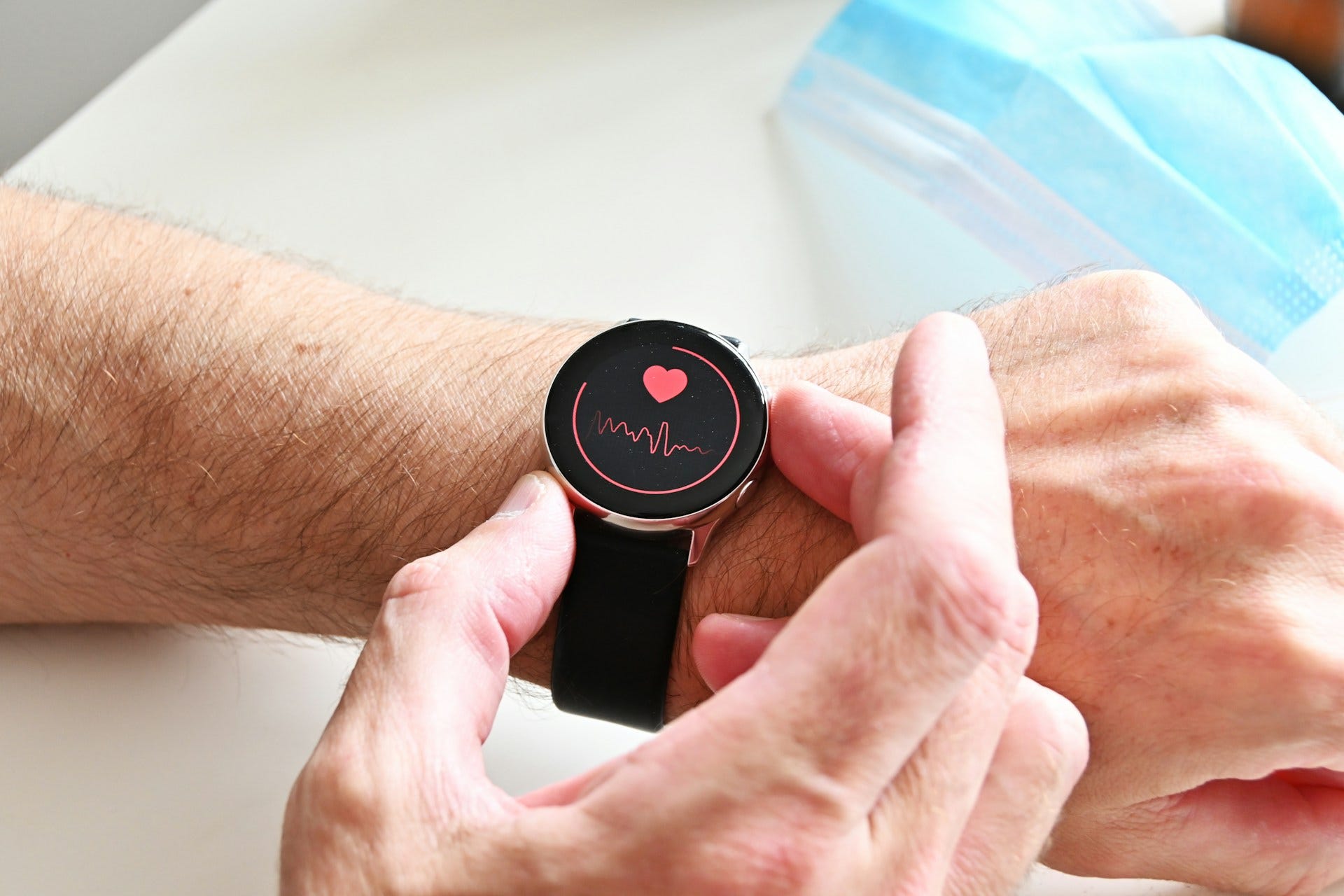
Can you feel the rhythm of your heart as it beats?
If you focus your attention on your hands or feet for a moment, can you sense the blood flowing in your fingers or toes?
If you’re unable to perceive your pulse in these ways, try placing a couple of fingers on your wrist or along the side of your neck.
Rather than counting the number of beats over a specific time period, simply tune in to the rhythm itself—just as you would observe any other aspect of nature, to observe for no other reason than because it’s kind of amazing.
Respiration
Breath awareness is already well-regarded in mindfulness practices, and for good reason.
You can focus on a few exhales or inhales, or observe both.
You have the option to control your breathing pace—either slightly, significantly, or even choose not to control it at all.
Don’t worry about stopping your thoughts. Instead, simply focus on the sensations associated with your breathing for a few seconds or minutes. You can keep your eyes open or closed. As with any mindfulness exercise, feel free to experiment and find an approach that captivates your interest.2
Pressure
Instead of focusing on your blood pressure, try to notice any subtle or overt emotional pressure you may be experiencing.
If you do identify such pressure, rather than trying to eliminate it, take time to examine its physical aspects.
Where do you feel it? Is it spread throughout your body or localized in a specific area?
Do any specific emotions stand out, such as fear, frustration, agitation, or restlessness?
How intense is the discomfort? Is it mild, moderate, or strong?
As you explore these sensations, pay attention to whether they change. Do their size, composition, or intensity shift as you investigate?
You can practice toggling your focus on the felt sense of your body functioning while sitting, standing, walking, or even lying down. Try them out in various situations. Explore all five, or just select one or two.
To turn them into formal meditation exercises, try the recorded twenty-minute guidance below.
Regularly paying attention to body sensations throughout the day is an excellent way to experience the benefits of mindfulness practice — not to aim for constant relaxation, but to elevate your baseline vitality.
Exercise
This exercise uses subtle and varied physical sensations to enhance body awareness.
Circumstances for learning this attention exercise
Waking up
Taking breaks from problem-solving during the day
Settling in to sleep


