


Closing your eyes is one of the most familiar ways to signal that you need a break.
We close them to sleep, to withdraw, to recover from too much stimulation. When our eyes are tired enough, keeping them open can feel like work.
As David Whyte describes in his poem “Sweet Darkness”:
When your eyes are tired
the world is tired also.When your vision has gone,
no part of the world can find you.Time to go into the dark
where the night has eyes
to recognize its own.
That association can complicate mindfulness practice. When you close your eyes, relax your body, and sit still for a minute, your nervous system might understandably assume you’re initiating a power-down sequence. Anyone who practices mindfulness consistently will recognize this.
Unfortunately, falling asleep while you meditate can feel like failing an important test you need to pass before moving on to an elusive next level. Especially the first hundred times. Even though experienced teachers consistently remind us not to treat drowsiness as an enemy or as evidence of a uniquely personal shortcoming, it remains a stubbornly persistent challenge for most of us.
Resting without falling asleep is a strangely private skill. We can watch someone sit still with their eyes closed, but we have no idea whether they’re deeply alert, drifting toward sleep, or mentally planning dinner. These shifts in attention happen almost entirely out of view. Attention is annoyingly private that way.
Rest, it turns out, is behind the eyes of the beholder.
My theory is that resting the eyes and falling asleep are simply activities we’ve practiced together so many thousands of times that the body expects one to lead to the other.
But with practice, they don’t have to.
There’s a familiar moment in a theater just before a film or play begins. The lights dim. The room disappears into darkness. Nothing is happening on the screen yet, but your attention doesn’t fade to black along with the room.
If anything, it becomes more available.
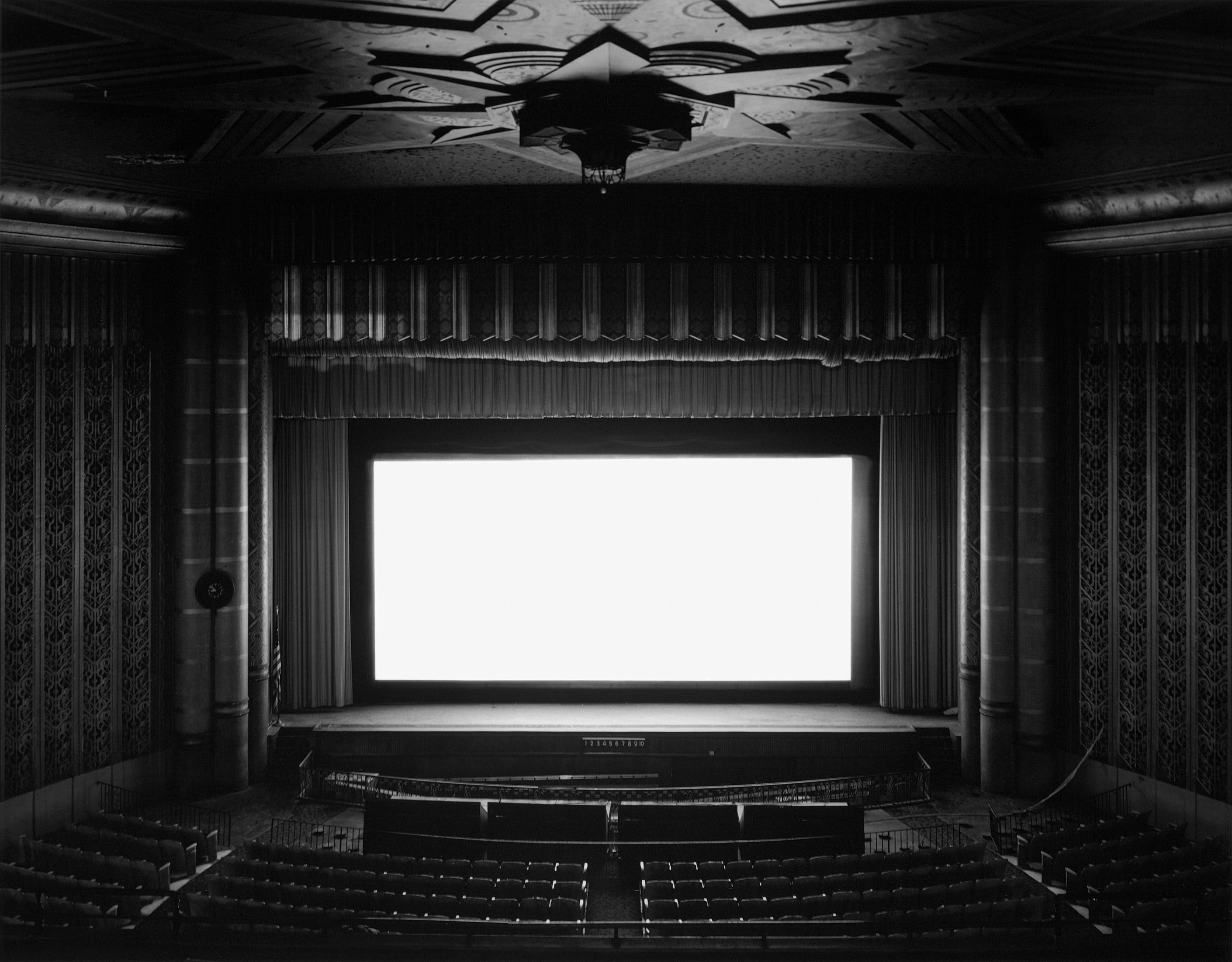
I’ve started thinking of visual rest the same way—not exclusively as a step toward powering down, but as an exploration of the restful side of an ordinary sensory phenomenon. Instead of turning the lights off, it’s more like shining a light on the darkness.
We sometimes stumble into this state accidentally when we stare out a rainy window or across a bustling restaurant and realize we’ve stopped looking at anything. We call it zoning out. Our eyes are open, but our habit of reaching toward objects, reading, identifying, comparing, and searching loosens for a moment. Our attention is aimed somewhere else.
That spontaneous pause may be revealing a useful, transferable skill.
The interesting experiment is to see whether we can learn to intentionally enter a state like that without disappearing into thought. Instead of zoning out because attention has gone down a narrative rabbit hole, we can focus on the less active side of seeing—the visual field itself, rather than whatever happens to occupy it.
With the eyes closed, there may be darkness, light, color, depth, graininess, movement, or shapes that are difficult to describe. With the eyes open, an entire field of light extends beyond whatever object is most visually interesting. As our gaze softens, the urge to analyze, interpret, and evaluate what we see thins out.
Most of the time, I barely notice the field. I pay attention to what occupies it.
But when I stop treating vision mainly as a way to identify objects and start exploring its boundaries and nuances, something can change. I can investigate my experience of the peripheries. I can notice what feels near and what feels distant. With my eyes closed, I can even become curious about the apparent shape of darkness.
None of this requires my thoughts to stop.
This matters because the aim of mindfulness practice has never been to make the mind go blank. It’s about developing an intimacy with sensory phenomena and human perception that we have to experience rather than imagine. Every category of perception has an active and inactive side. We can hear a sound or hear silence. We can feel an uncomfortable physical sensation or relaxation. We can see what’s in front of our eyes, close them, or even look past them with our eyes open.
Becoming more familiar with restful sensations reveals places for our attention to rest that most people don’t realize are available.
Learning to rest your eyes doesn’t have to mean withdrawing from life. In fact, it can make the opposite possible. Practicing with your eyes open can blur the line between formal meditation and the rest of your life. You can soften your gaze at a desk, in a waiting room, on a park bench, or while watching the sun go down. You can notice that your eyes are straining and invite them to soften a bit without stopping what you’re doing.
We need genuinely restful situations to recover and thrive. But it can also be liberating to notice moments of rest within almost any situation. The central theme of this series is learning to recognize and savor those sensations—even in the middle of ordinary, sometimes restless, life—instead of waiting for ideal circumstances.
We need genuinely restful situations to recover and thrive. But it can also be liberating to notice moments of rest within almost any situation. This week, I wrote about an interruption during morning meditation that became an unexpected demonstration of this. The central theme of this series is learning to recognize and savor those sensations—even in the middle of ordinary, sometimes restless, life—instead of waiting for ideal circumstances.
This also begins to prepare us for something we’ll explore later in this series. Images often appear on the mind’s internal movie screen. Sometimes nothing is being projected there to look at. Learning to rest with ordinary visual experience can eventually make it easier to notice the visual side of thinking without immediately getting drawn into the plot and fighting it.
Today’s assignment is simpler.
See what happens when you permit your eyes to rest without assuming your attention needs to drift completely away.
Explore the shape of darkness with your eyes closed, or the shape of light with them open.
And later, notice the small moments when your eyes seem to want a pause on their own.
What looks like zoning out to others may not always be a lapse in attention.
When you do it on purpose, you learn to savor visual rest without waiting for the world to make it easier.
Exercise
This attention exercise explores visual rest by softening your gaze, noticing the boundaries of your visual field, and investigating the shape of darkness or light with your eyes open or closed.
When to use this attention exercise:
After extended reading or screen time, when your eyes feel strained
While riding as a passenger or taking public transportation
During a transition between activities, before turning your attention to whatever comes next
